


I’m a train fanatic, but I’m also frugal. So when global coaching giant FlixBus announced it was launching in Australia with $9.99 promo fares, I knew a test ride was inevitable.
FlixBus is the biggest intercity bus company in Germany, very active in other European countries, and also owns Greyhound in the USA (though not in Australia).
Its model echoes low-cost airlines. There’s often a low headline fare, but you’ll pay for seat selection and extra luggage, and last-minute bookings will rarely be as cheap.
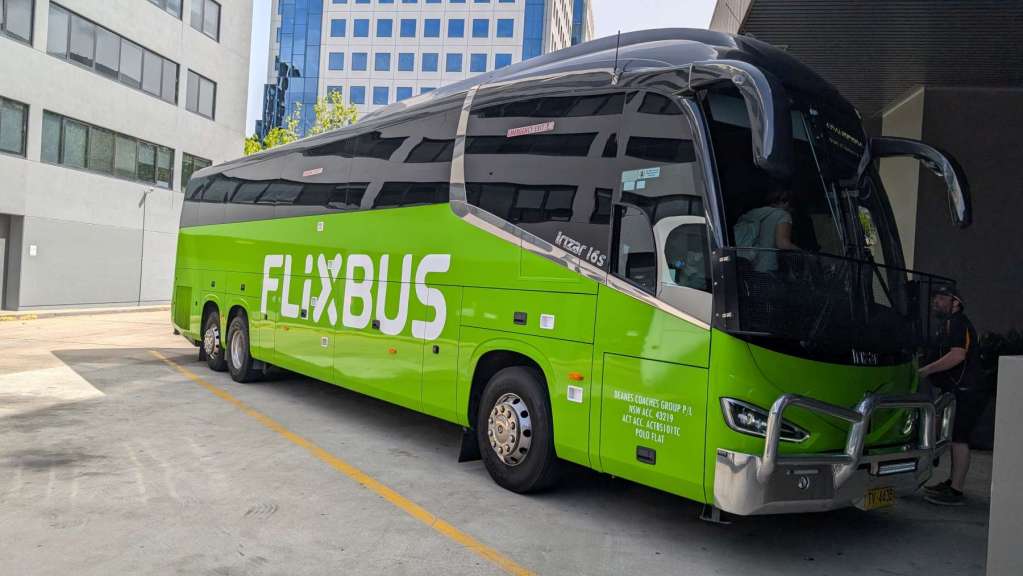
Right now FlixBus is only running on the east coast, with services between Sydney, Melbourne, Canberra and Albury. For me, the obvious one to test was Sydney-Canberra, a trip I do very regularly on the Xplorer train. So this morning I boarded the 0645am FlixBus service from Central, which was due into Canberra at 1015am.
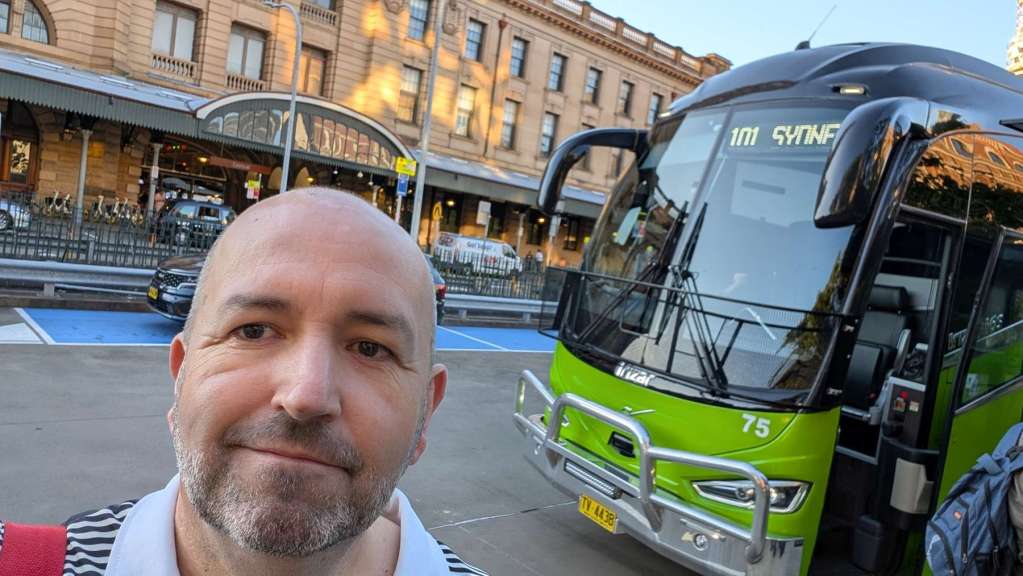
As timetabled, the trip is marginally slower by train than by coach. The train journey usually takes a little over 4 hours assuming no track issues, though such issues are depressingly frequent. Upside: you can easily work on the train, although reception is patchy for large stretches and there are no power outlets.
The train is also somewhat more expensive (though way cheaper than flying). A single economy seat costs at least $42.95. I generally use a Discovery Pass, though you can’t get those for First Class anymore, alas.
But I digress. What does the coach cost? The cheapest FlixBus seat for Sydney-Canberra is indeed $9.99, which is technically made up of an $8 fee for the seat and a $1.99 service fee.
I paid a little more than that. I didn’t want to be shoved on the aisle next to some random idiot, so I paid $1.79 for seat selection.
And then FlixBus tempted me: I could pay another $8 to book the seat next to me as well, ensuring I had no annoying neighbour. As a marginally tall person, I decided that was also worth it. $19.78 is still a cheap seat, and quite probably less than the petrol cost for driving.

Turns out the bus was only half-full at best, so I needn’t have splurged to ensure my privacy. But I’d rather be sure. (I didn’t need to pay for any checked luggage either.)
As befits a cheapskate company, FlixBus doesn’t print tickets. You can flash the barcode in your email, download a ticket and print yourself if you’re keen, or access the ticket via the FlixBus app.

I went for the app, which offered the added advantage of real-time updates for any service delays, an on-screen journey tracker and detailed directions to where to catch your coach (bay 9 in my case). That’s a big improvement on many inter-city buses I’ve caught, which can skimp on those details.
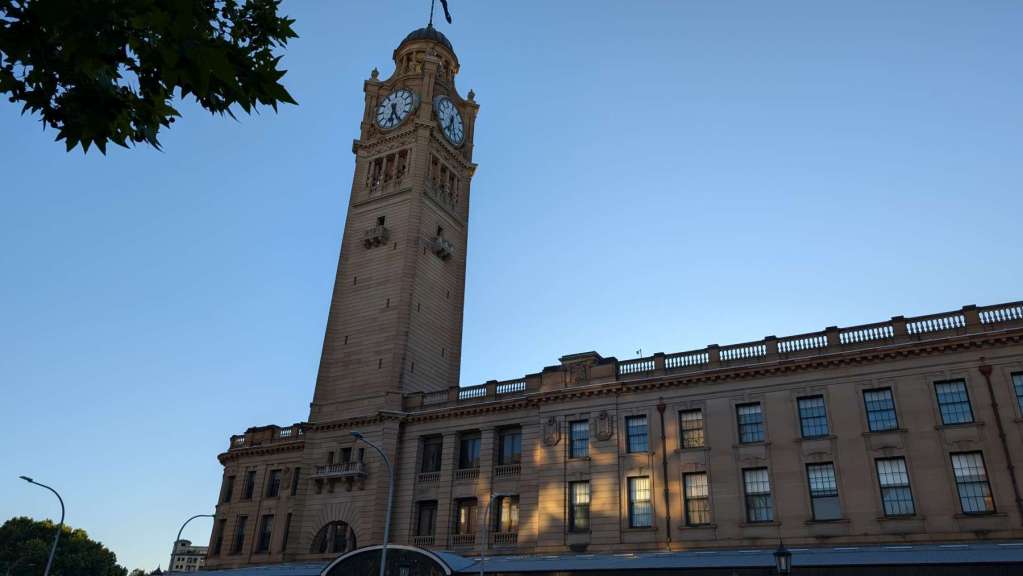
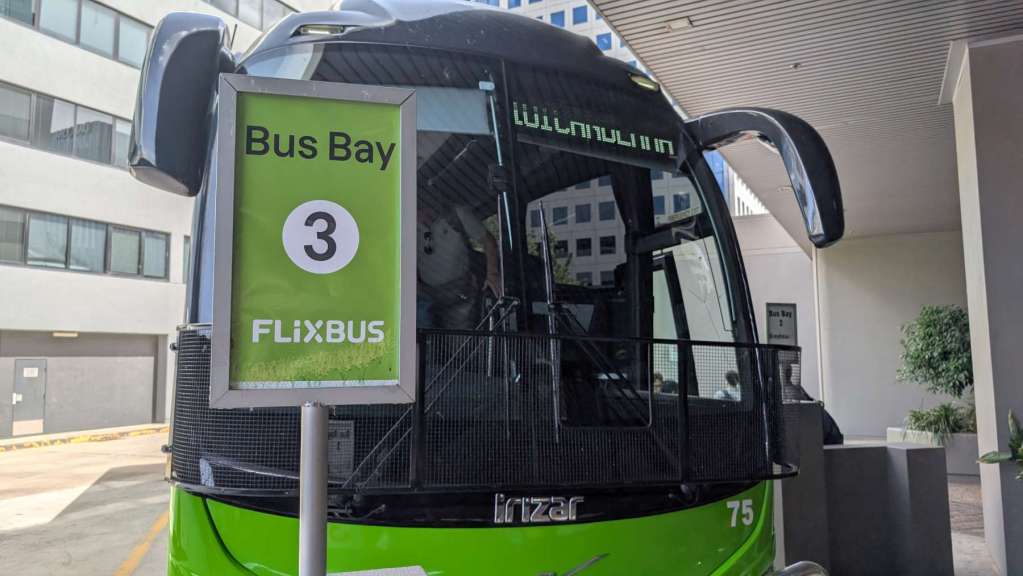
Bay 9 is just outside the main concourse at Central, which again beats when these services used to depart from Eddy Avenue.

Happily, the bus pulled in just as I was arriving the prescribed 15 minutes early, eliminating any potential for confusion.
Or so I thought. Turns out the two passengers already waiting at the stop wanted the Melbourne service, which wasn’t leaving until 0745am. Having dispatched them to the bus shelter, the driver scanned my tickets and I boarded.

The seats are in (some version of) leather, with plenty of leg room. My knees didn’t hit the seat in front even when the passenger in front of me reclined it.

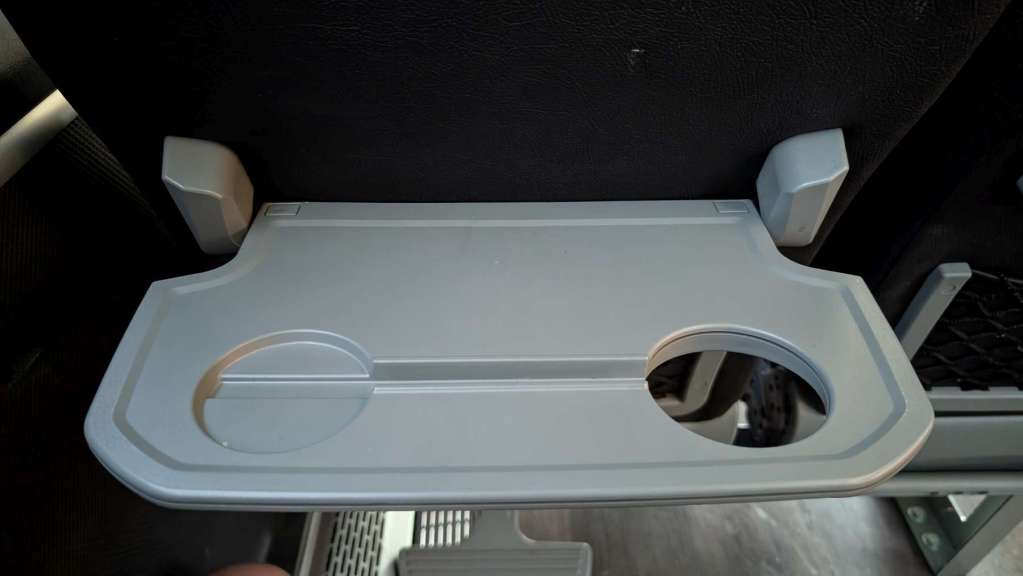
There’s a pull-down table with a water bottle slot, though that wouldn’t be large enough to rest a laptop on. The passenger opposite had her water bottle suspended in it neck-first, which ensured it didn’t fall off in transit.
There’s a single rubber-capped USB outlet for charging between the seats, which again made me glad I didn’t have a neighbour. That offered decent output, with my phone recharging to full within 30 minutes.
We have brief scheduled stops at Sydney’s domestic and international terminals at 0705am and 0710am, which seemed excessively ambitious in Sydney morning traffic. And indeed it was 0725am when we finally pulled out of the airport complex and hit the Hume Highway, having acquired a couple of vocal German tourists who doubtless recognised the brand.
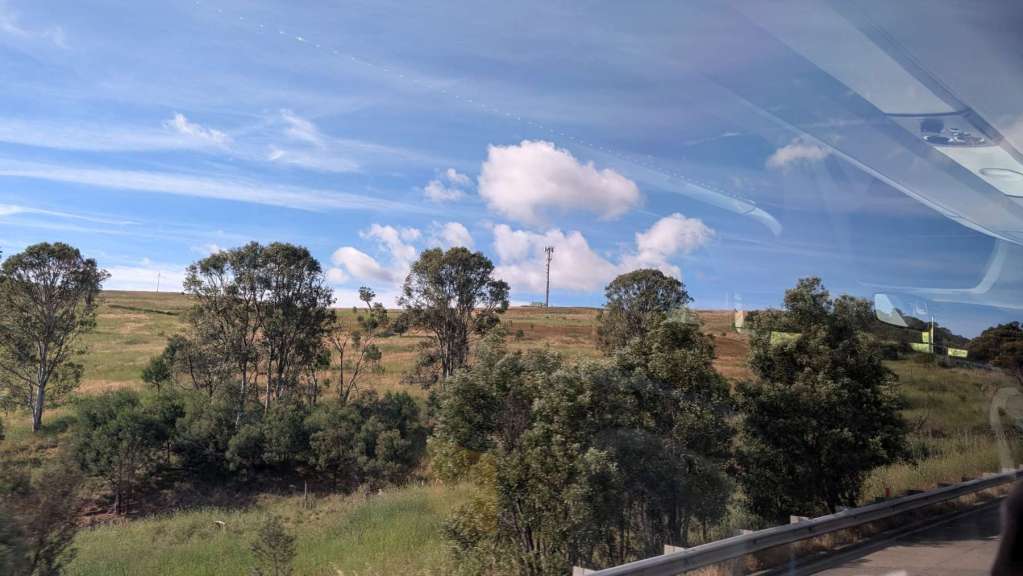
Once on the highway, I decided to test out the onboard Wi-Fi. Obviously, coach Wi-Fi is always going to be variable given you’re on the move and often in relatively unpopulated areas, and you’re still connecting to the phone network anyway.

WIth that caveat, it worked well enough. You’re restricted to a paltry 300MB of data and video streaming apps are blocked. The service is provided by RebelRoam and uses Telstra’s network, though not, it seems, at full capacity.
The speed tests I ran for the bus Wi-Fi had it running slower than when I just used my own Telstra-network 5G. So I suspect many people won’t bother, unless they’re a tourist trying to preserve their limited travel SIM data allowance. There were a couple of brief no-network black spots, but far fewer than on the train.
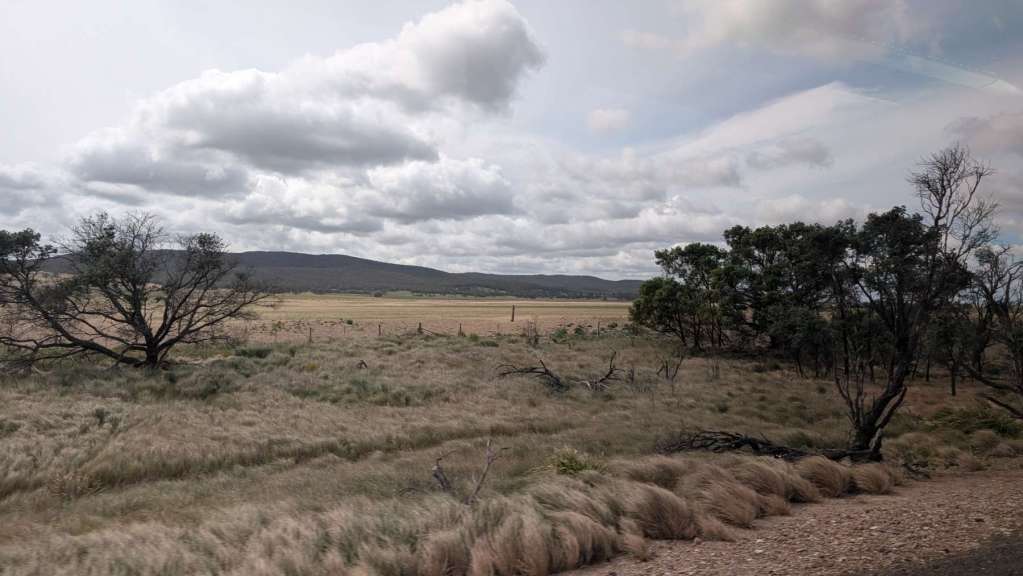
The Hume is an efficient but dull highway, with almost no scenery of note other than when we sweep past Lake George.

In that respect, the train definitely offers better views.
We never make up the lost time, hitting Canberra just before 1030am, as the app has predicted.

We don’t get any announcements from the driver until we’re almost pulling into the Jolimont Tourist Centre where the service terminates: “Check that youse haven’t left anything behind.”
Bottom line? No complaints and good value, even with the extra seat fee. The charging worked well and the delay was no more than you’d expect in peak hour traffic.
I don’t think Flixbus will become my preferred mode of transport to Canberra, but it’s an option I’l keep in the frugal back pocket.

For more travel reviews, check out how Qantas priority boarding works in practice and Queensland’s longest 50 cent train ride.
| Angus Kidman: My honest review commitment * I only review products and services I’ve tried myself. * I pay for those products and services myself. * I don’t make any money from affiliate links or promotional deals – my reviews are an honest reflection of my experience. |
Leave a Reply