
This week, it’s been free to travel on Sydney’s light rail network, a move designed to try and stave off industrial action. One of the issues behind the strike is a push for 50 cent fares in NSW, which is something I can get behind.
Anyway, I thought I’d take advantage and ride the entire network in one sitting while it was free. So that was my Tuesday afternoon sorted. Here’s what went down.

Sydney’s light rail network consists of 3 lines:
- L1 runs from Central to Dulwich Hill, serving Darling Harbour, inner-city Glebe and Lilyfield and then running out to the inner west.
- L2 runs from Circular Quay to Randwick, covering the city, Surry Hills, UNSW and the Moore Park entertainment preccint.
- L3 runs from Circular Quay to Juniors Kingsford, running on the same track as L2 from Circular Quay to Moore Park and then splitting.
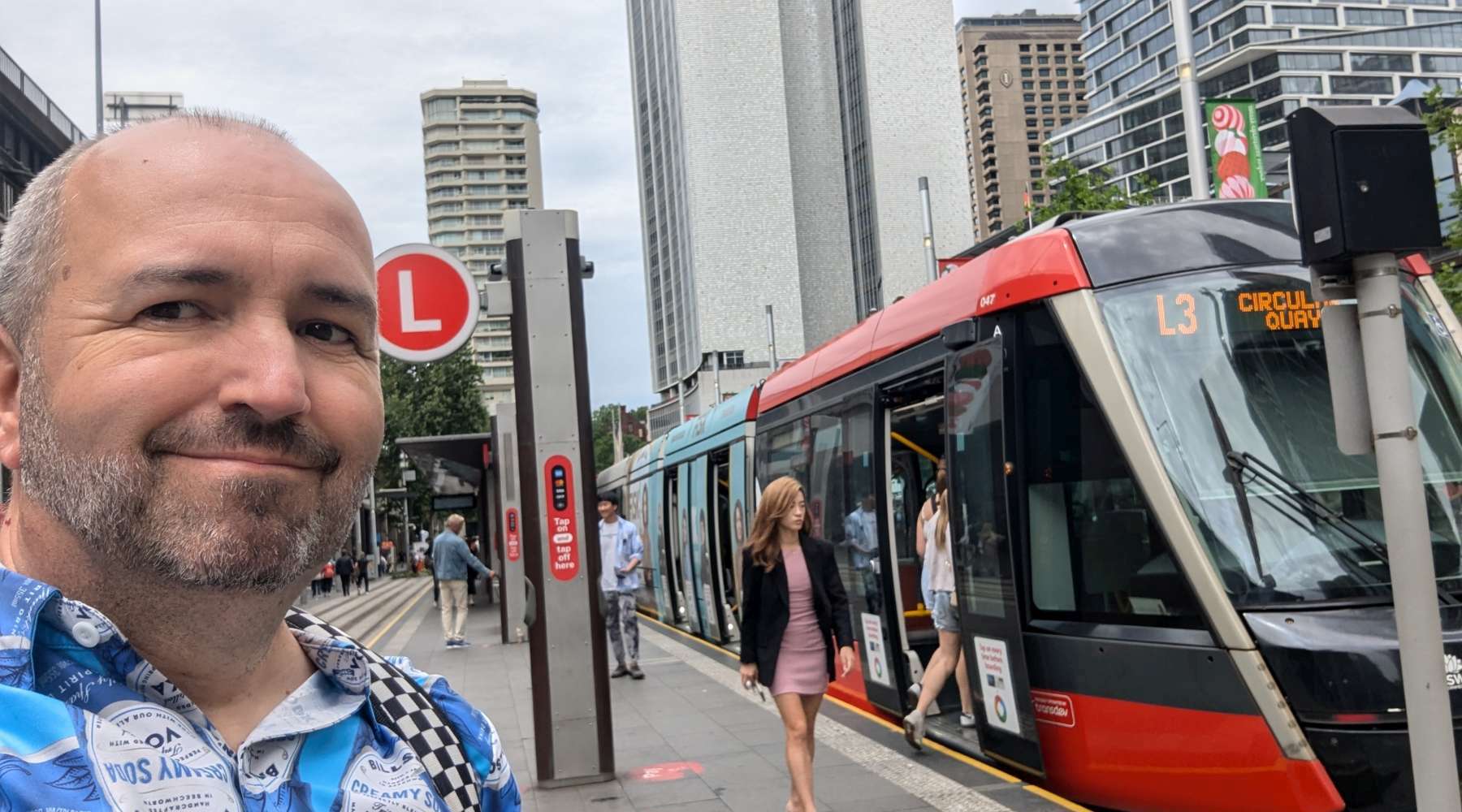
To travel the whole network, I decided to go from Circular Quay to Juniors Kingsford, back to Moore Park, out to Randwick, back to Central, then out to Dulwich Hill. Here’s how it went down.
1251-1329 Circular Quay-Juniors Kingsford
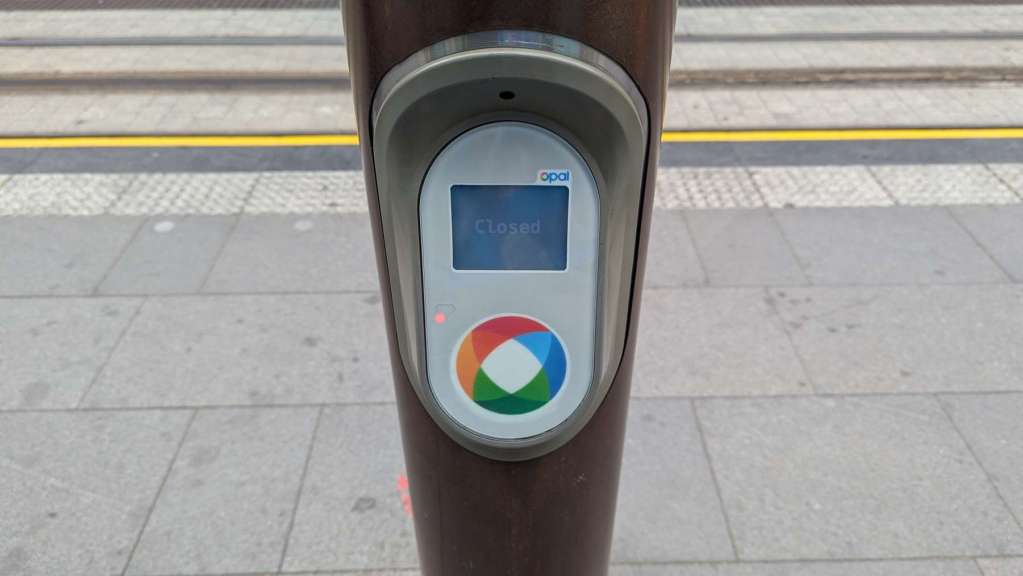
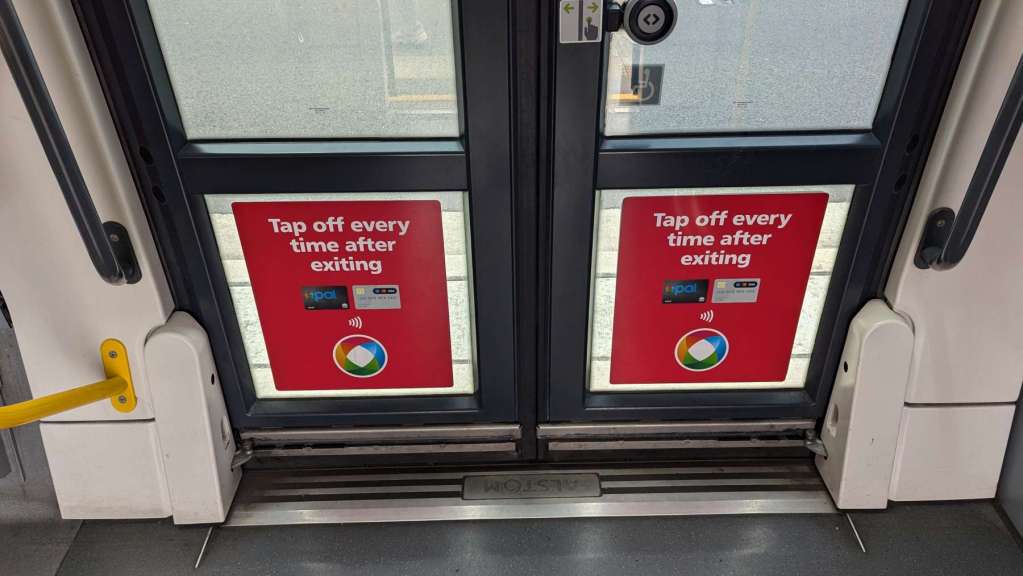
There are marshals on the platform to explain you don’t need to tap on, though as the Opal card readers are switched to “Closed” there’s no risk if you do.
Not everyone understands what’s going on though. “People don’t know it’s free,” says a woman on the tram I board. “It was closed on the weekend so it might be because of that,” her friend replies. Well, no.
The Circular Quay to Central section is pedestrianised. That means we’re not competing with traffic much, but it’s still somewhat slow going.
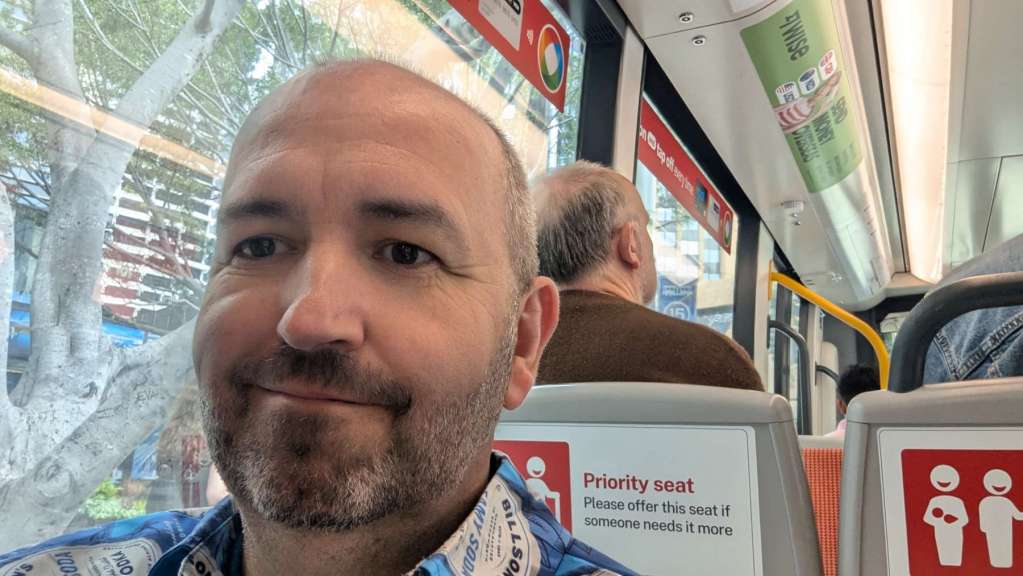
By the time we reach the Queen Victoria Building stop, the tram is packed, with no seats free at all. The crowd is a mix of tourists, workers and students. Oh, and a shirtless gibbering guy clearly high on something who repeatedly punches the doors until he gets out at Central.
At Central Chalmers Street, there’s a whole fresh crowd of folks who have clearly come off trans. This includes a surprising number of school kids, given that it’s well before the end of the school day.
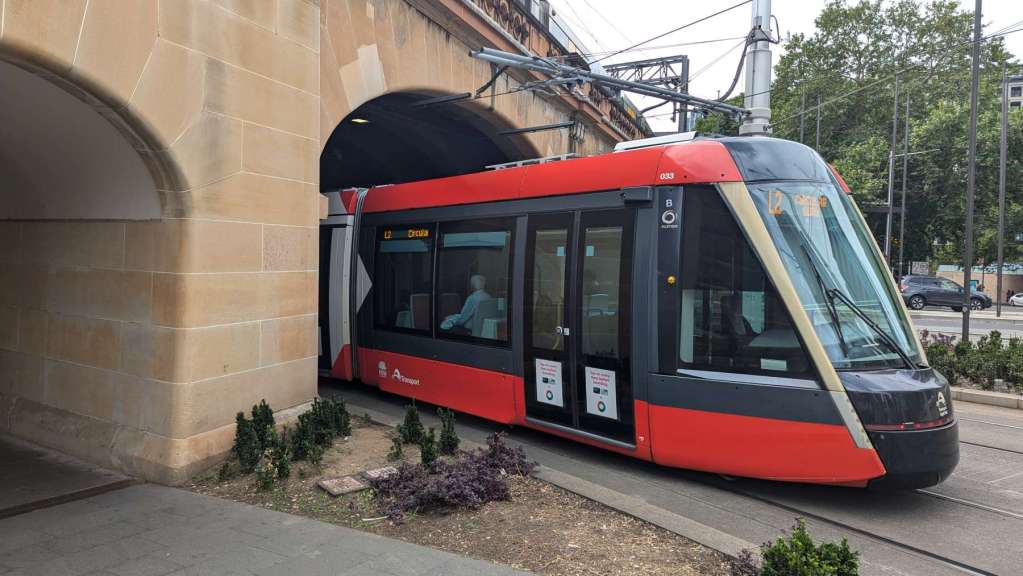
Once we thrust through Surry Hills we move to a lengthy tunnelled section leading to Moore Park. My most common use of this line has been to get to concerts here, so this is all familiar. Past this we have street running but in a dedicated corridor.
The most popular stop on this section proves to be UNSW Anzac Parade, where swathes of presumed students make their exit. But we’re still not empty by the time we reach Juniors Kingsford.
1333-1344 Juniors Kingsford-Moore Park
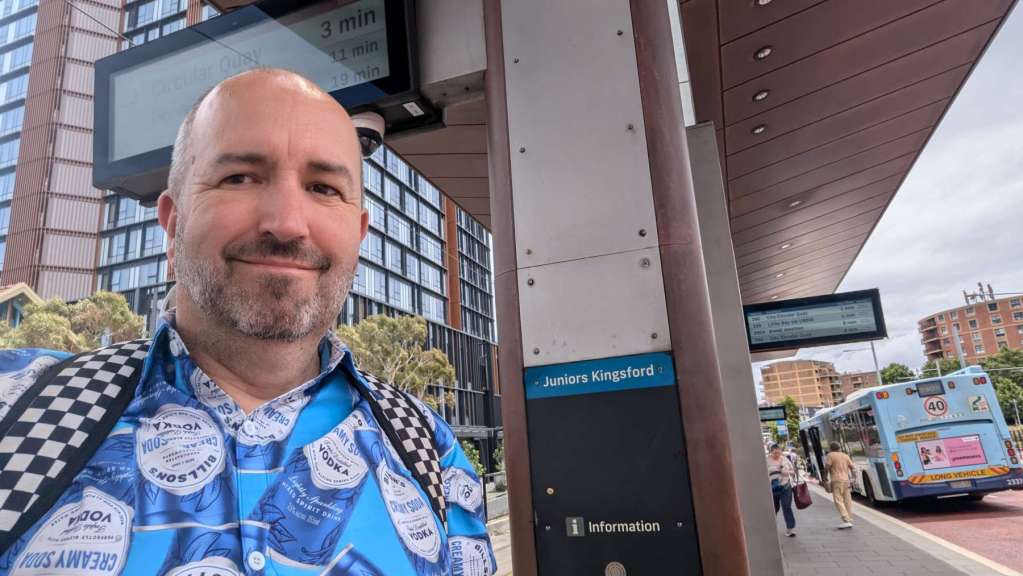
Juniors has a pair of island platforms designed for bus interchange, with the tram itself turning around in a loop further along. That means I’ve got 4 minutes to board the next train back to Moore Park so I can switch to the Randwick branch.
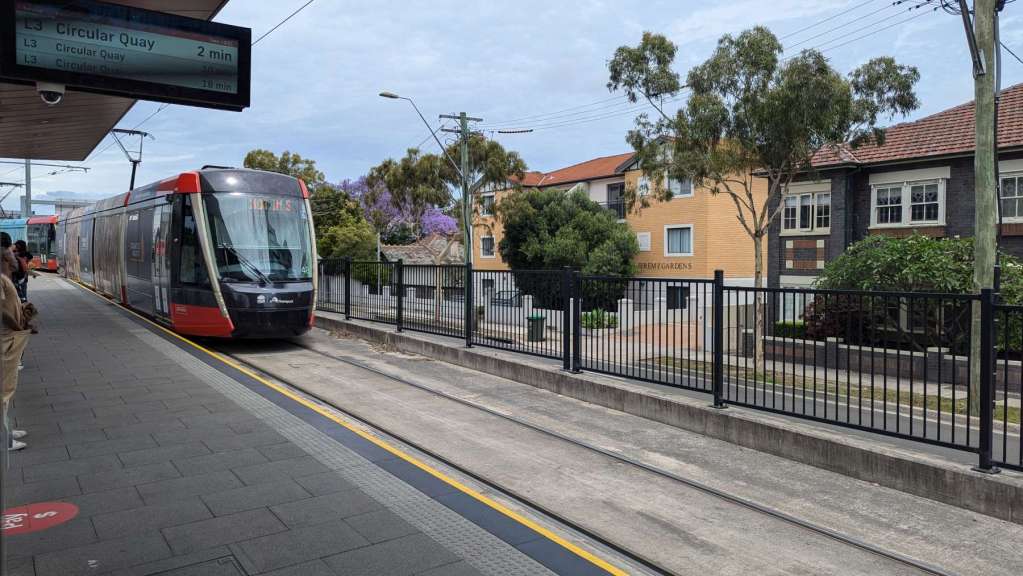
A handful of others join me, with a predictably large influx at UNSW again.
My observation from this sector? No-one thinks twice about sitting in the seats reserved for accessibility. That said, I don’t see anyone who might need one actually denied a seat.
1348-1400 Moore Park-Randwick
There’s another 4-minute wait at Moore Park’s island platform for a Randwick service. Naturally, the first tram in is going back to Kingsford, not Randwick.
But that gives me a chance to appreciate that the spacing of the trams isn’t particularly even, which is to be expected on a service with street running for most of its length.
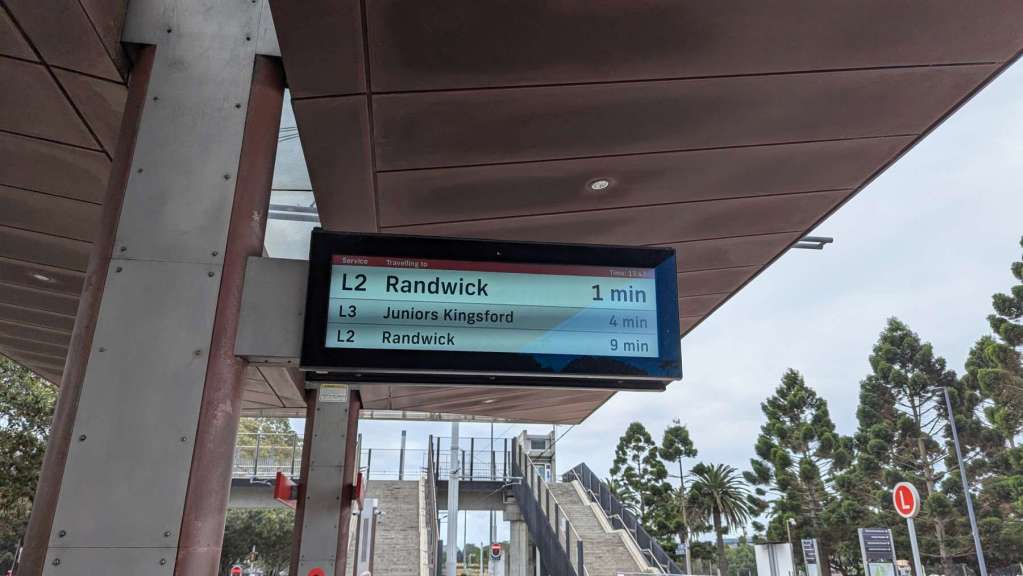
This is, unsurprisingly, the first tram I can’t get a seat on, though I wouldn’t describe it as heaving. And it’s only a 12-minute journey so I’m not complaining.
1401-1419 Randwick-Central Chalmers Street
The return train is waiting on Randwick’s island platform when I arrive, so it’s a rapid dash across to grab a seat back to the city.
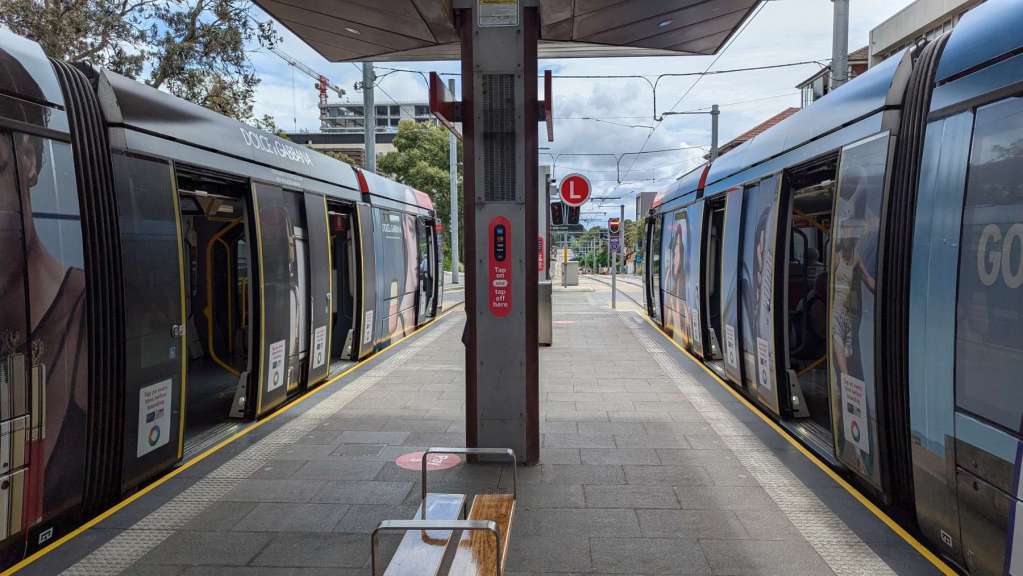
By Moore Park the students are entirely in evidence, and the conversation between some of them is surreal.
She had a sick accent.
I think she’s Japanese.
Japanese? It sounded like German. It was crazy.
Yeah literally crazy.
All this delivered in the broadest strine and continuing with far too many uses of “literally” all the way back to Central.

While the recommended interchange point between L2/L3 and L1 is changing at Chinatown for Capitol Square, I need to get off at Central Chalmers Street in order to say I’ve passed through every stop.
A quick jaunt around the edges of Central takes me to the Grand Concourse stop, where trams perform a loop.
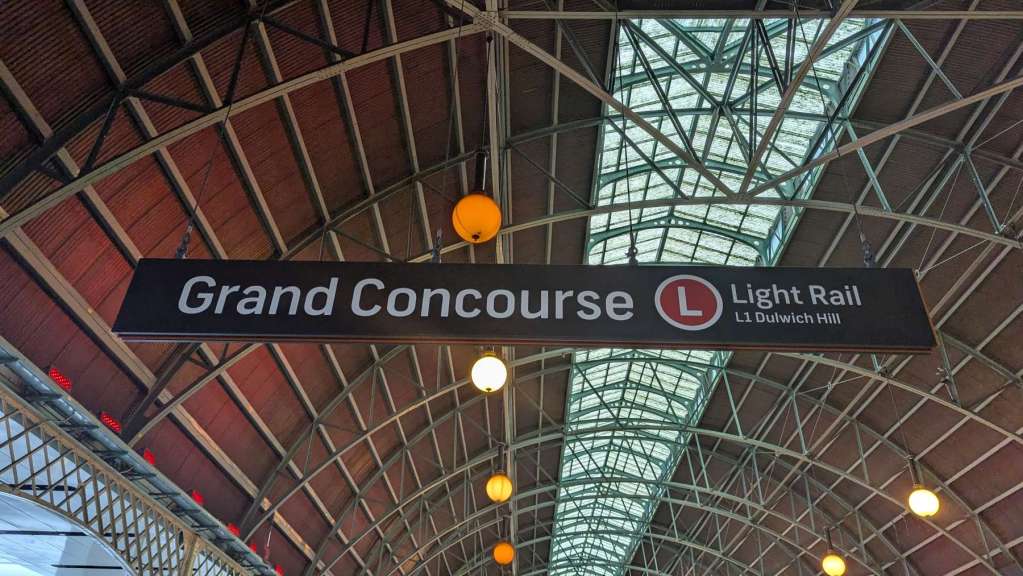
1427-1505 Central Grand Concourse-Dulwich Hill
This line is very much a tale of two halves – folks who are trying to get to Darling Harbour and folks heading for the inner west. Apart from the very first segment, it’s a reclaimed industrial line with no on-street running, getting progressively greener as we head west.

Unlike on the L1 and L2 trains, announcements telling people (incorrectly) to tap on continue. I guess it wasn’t easy to program switching them off.
I’m slightly bemused by folks who get on at Central and off at Capitol Square, the very next stop. It would most likely be quicker to walk, and I don’t see them heading for the other line either.

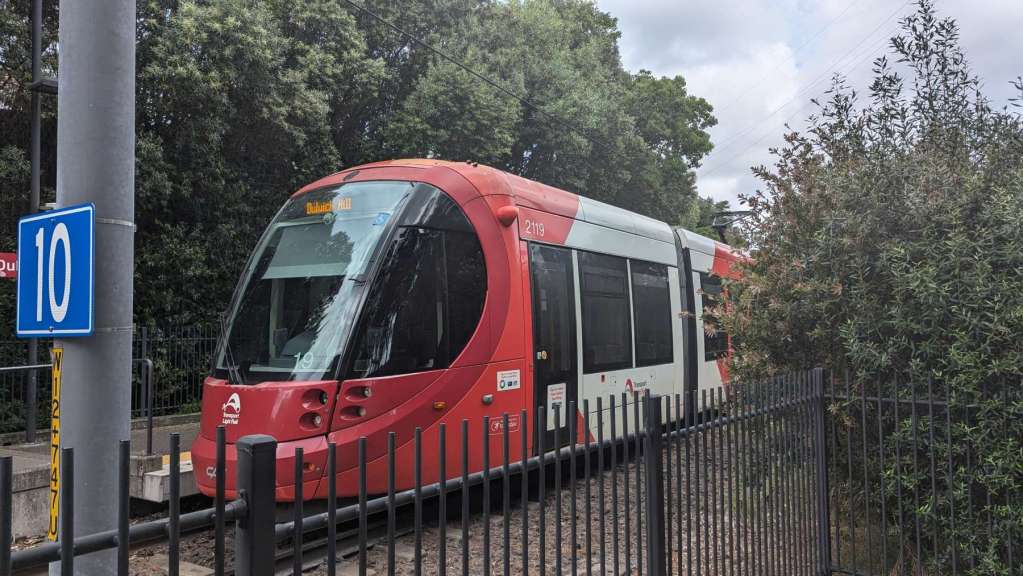
This is the longest leg, and by the end, the quietest. When I get out into leafy Dulwich Hill, there are only 6 other passengers, and only 1 getting on board for the return leg.
What have we learned?
- The network is popular even in the middle of the day, which is a slap in the eye for everyone who complained it would never be used when it was being built and expanded. (I bet those complaining rarely if ever take public transport – we know from Sydney transport stats that most folks don’t.)
- 2 hours and 14 minutes is a long time to travel a couple of dozen kilometres. If I’d boarded a train at Central, I could have been in Fassifern in that time.
- I’m far too easily tempted by free and cheap rail travel. For more railway cheapskate action, check out how I took Queensland’s longest 50 cent train ride.


Leave a Reply